
The SSPX and the Importance of Technicalities
Catholics who choose to take advantage of legal loopholes ought to weigh the eternal consequences of getting it wrong.


Catholics who choose to take advantage of legal loopholes ought to weigh the eternal consequences of getting it wrong.

Defenders of the SSPX commit a category error when they invoke a state of emergency (or grave necessity) to justify disobedience.
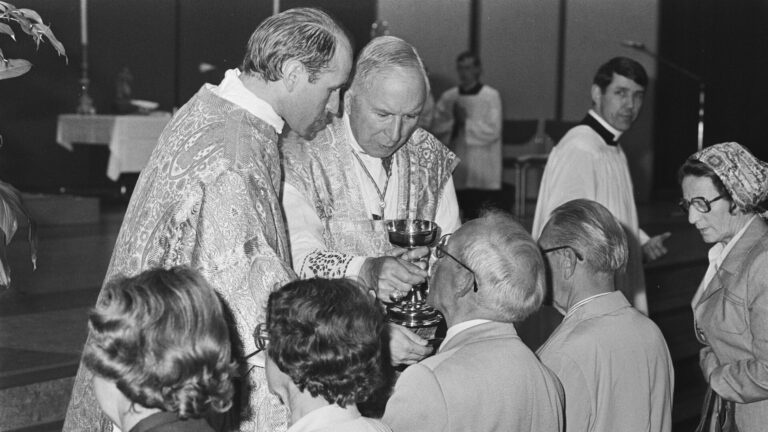
While an act may violate the requirement for a pontifical mandate, it does not necessarily juridically constitute a rupture of communion or schism.
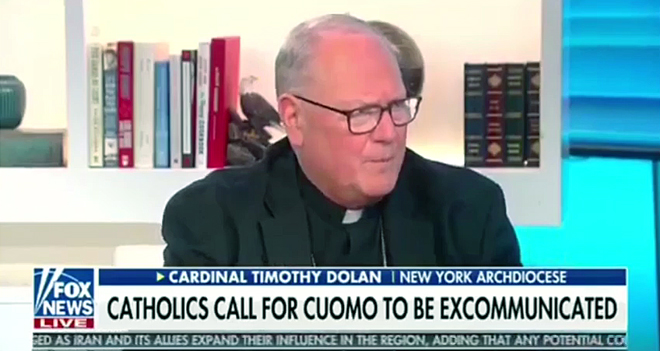
“Ghoulish, grisly, gruesome.” These are the strong words used by Cardinal Timothy Dolan to describe the Reproductive Health Act signed on January 22 by Catholic Governor of New York Andrew Cuomo that, with a broad definition of heath, permits abortion through the ninth month of pregnancy. When the cardinal appeared on Fox and Friends on January 28, … Read more
In the wake of the “Uncle Ted” McCarrick scandal have come a series of recommendations about where the Church should go from here and what the laity can do to help. Answers range from Anthony Esolen’s urging the resignation of every bishop who knew of the Cardinal’s vile actions to Christopher Tollefsen’s invitation to suspend … Read more
Marriage is a sacrament that is regulated by Church law, mainly in the Code of Canon Law of 1983. It is different from the rest of the sacraments, because what makes it valid is mainly marriage consent. A person must want to get married to his spouse, and manifest this will verbally to the priest … Read more
Just remember—Pope St. John Paul II said it first. On January 28, 2002. After saying “One cannot give in to the divorce mentality,” our Holy Father tells us this: When one considers the role of law in marital crises, all too often one thinks almost exclusively of processes that ratify the annulment of marriage or … Read more
In his article in Crisis, “The Anointing of the Healthy?,” Kevin T. DiCamillo contrasted a pre-Vatican II understanding of the sacrament of Extreme Unction with the rite now known as the Anointing of the Sick, stating that “of the seven sacraments of the Church perhaps none underwent more transformation.” Indeed, he claimed, “Extreme Unction became … Read more
The 2015 October Synod on the Family has ended. So, what came out of it? A final document was handed to Pope Francis that was a fine academic treatise on the family. But media reports say that Cardinals, archbishops and theologians are still wrestling over whether the Synod opened a way for “some” divorced and … Read more
Abortion has long sat in the middle of a three-street ecclesial intersection, namely, those of Sin, Crime, and Sanction. The meeting of any two of these factors would make for a perilous perch but the confluence of all three is fraught with opportunities for confusion. At the risk of serious over-simplification, let me sketch the … Read more
In a prior essay in Crisis I offered an explanation concerning how the exchange of conjugal rights, understood in natural, canon, and civil law traditions as mutual moral rights for actions naturally ordered to the procreation of children, can be recognized as a necessary condition for a valid marriage. Hence, if a person is certainly … Read more
Often in discussions on whether the term “marriage” should be reserved for relationships between persons of opposite sex, advocates for same-sex “marriage” claim that there is no distinguishing characteristic in male/female commitments that would make only those commitments truly marital. The obvious response that children come only from opposite sex relationships is quickly dismissed since … Read more
In a recent piece on the Synod, I argued that sometimes a change of Church discipline cannot not happen without a change in Church doctrine, and that since Church doctrine about Communion for Catholics who have obtained a civil divorce and remarriage does not change, Catholics should not expect Church discipline to change either. Today I … Read more
Many people who venerate the name of Thomas Becket (and/or love the movie with Richard Burton and Peter O’Toole that carries his name) likely do not understand the cause for which he was martyred, and if they did learn it, would likely be scandalized given our current presuppositions concerning the prerogatives of the omnipotent State … Read more
We’ve all known administrators who were hired to do a certain job, but when they found they couldn’t do that job, they either tried to do everyone else’s job or else tried to change the job into something else completely. This problem is not uncommon, for example, among functionaries who do fund-raising for colleges. They … Read more