


• Subscribe to Crisis

  • The Cristeros and Us

    by George Weigel

    cristeros

    Most Americans haven’t the foggiest idea that a quasi-Stalinist, violently anti-Catholic regime once existed on our southern borders. Those who don’t know how bad Mexico was in the late 1920s are about to learn, though: at least those who see For Greater Glory, a recently-released movie about the Cristero War, a passionate (and bloody) defense of Catholicism that’s remembered today, if at all, because of Graham Greene’s novel, The Power and the Glory.

    There’s been a strange silence about all this for almost a century. Even Catholics aware of the extent of twentieth-century martyrdom seem to have little sense of the modern Mexican martyrs—although the addition of the memorial of St. Christopher Magallanes and Companions to the universal liturgical calendar (May 21) ought to remind North American Catholics just what was going on south of the Rio Grande during the years when the brutal government of Plutarco Elias Calles tried to destroy the Catholic Church in Mexico. It was a terrible time, and the example of the Cristeros, who included both underground priests like Blessed Miguel Pro, S.J. (perhaps the first martyr in two millennia to be photographed at the moment of his death) and fighters like General Enrique Gorostieta (well-played by Academy Award nominee Andy Garcia in the new film) ought to inspire twentyfirst-century Catholics to stand firm in defense of religious freedom.
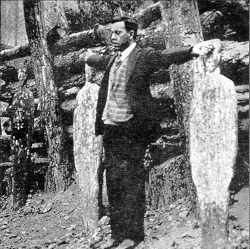
    For Greater Glory takes some artistic liberties with history; the martyrdom of Christopher Magallanes, for example, happened in somewhat different circumstances than those described in the film. But taken as a whole, the movie conveys both the hard truth about the Calles regime and the often noble, but sometimes conflicted, story of Calles’s Cristero opponents. The most moving subplot in the movie involves Jose Luis Sanchez de Rio, a teenager converted to serious Catholicism by Christopher Magallanes (as the film tells it) and “adopted,” in spirit, by General Gorostieta when the lad asks to join the Cristeros. Whatever the artistic license taken with the details of these relationships, it will be a hard heart indeed that is not moved by the depiction of the boy’s martyrdom, as he defies torture and blandishments, all intended to get him to apostasize, and cries “Viva Cristo Rey!” just before the bullets strike him down. Jose Luis Sanchez del Rio was beatified on Nov. 20, 2005; his liturgical commemoration (Feb. 10, the day of his death) should shape the rhythm of liturgical life in U.S. parishes, like those of St. Christopher Magallanes and Bl. Miguel Pro (Nov. 23).

    In his Chrism Mass homily in April, Cardinal Donald Wuerl of Washington urged his priests and seminarians to see For Greater Glory. Cardinal Wuerl is not given to dramatic gestures; his suggestion that the film might help form the self-understanding of Washington’s priests and future priests was all the more powerful for that. Barack Obama is not Plutarco Elias Calles, and the United States in 2012 is not Mexico in 1926-29. But anyone who doubts that there are grave threats to religious freedom in North America today has only to consider the HHS “contraceptive mandate,” the administration’s refusal to defend the Defense of Marriage Act, the administration’s efforts to void the “ministerial exemption” in U.S. employment law, and the bad habit of Canadian human rights “tribunals” to levy serious financial penalties against Christian ministers who preach biblical truth.

    Threats to religious freedom come in many forms—some hard, like during the Cristero War; some softer, if no less lethal to the first freedom. One way to blunt the hard threats is to stand firmly against the softer threats and to name those threats for what they are. For Greater Glory will inspire and encourage those already committed to defending religious freedom today. It is even more important, though, that those who haven’t yet seen the threat, or who deny that it exists, ponder this powerful depiction of the nearby and not-so-distant past, for the sake of the present and future.

    The views expressed by the authors and editorial staff are not necessarily the views of
    Sophia Institute, Holy Spirit College, or the Thomas More College of Liberal Arts.

    Print this   |   Share this

    • Gamartin

      The concept of the “the one true Church, outside of which there is no salvation” is the defining difference between the Church today vs. that of Mexico in 1925.  It will be interesting to see how the Vatican II children will stand up with conviction vs. the old traditional Catholic portrayed in the movie.  Funny how one’s faith and conviction become clear when people are hung from telephone poles.

    • Tcjy8

      I think that the situation is more grave than Cardinal Wuerl and Dr. Weigel imagine.  All Catholics should have felt the opposite of Chris Matthews’s famous thrill as woon as candidate Obabma introduced his pro-abort. pro-sodomy running mate as a “committed Catholic.”  The ruling secularist elite want to define the “good Catholics” as those who support the radical secularits agenda so that they define Catholics loyal to the Magisterium as traitors who are loyal to a retrograde, tyrrnical, hate mongering, hmophobic foreign power.  As to Gamartin’s speculation, let us not forget that huge numbers of people who think that hey are practicing Catholics believe that support for both abortion and s0-called same-sex marriage are permitted under the law of love  (whatever that is), and they believe that this justifies supporting anti-Catholic candidates and orgainzations.  Just yesterday I recieved on Facebbok from a priest a link to an emotionally wrenching video about a suicide that we are suppposed to believe could have been prevented if the state in question allowed same-sex marriage.   How do you think that his friends and parishoners will vote?   

    • http://profile.yahoo.com/5ZOI7JHXMGQXGW47W7ORRGF64I Mark

      Not since seeing The Deer Hunter in the late 1970′s have I witnessed such an impact on a theater audience. We stayed through the credits. Some got up to leave, then stood transfixed in the aisles.

    • Dominic Tondo

      I’m curious to know why, if Cardinal Wuerl indeed promoted the movie among his priests, the film was not promoted in the wider archdiocese. I know that in my parish, and in parishes of my friends, the movie was not promoted from the pulpit or even announced in the bulletin. Perhaps the Archdiocese of Washington is averse to controversy as witnessed in the recent capitulation to the homosexual community in the recent denial of communion to a lesbian.

    • Tcjy8

      Dominic and others who care:  This situation is part of what the Blessed Mother told the children of Fatima concerning a “diabolical disorientation.”  So many priests are refusing to tell their flocks and students about the evil nature of this regmie because the priority for so many of them is the advacnement of the homosexual agenda.  This is why there are so many pro-aborts in office.  Catholics are told that there are more important issues, such as imigration and that the socialist policies of the the abortion party that will reduce the demand for abortion, but the real reason they urge support for the pro-aborts is that those are the pols who support nihilistic values dressed up as charity.  Our country is now led by a man who was apprenticed at the age of ten by his own gradnfather to a notorious Communist  who claimed that reports of religious persecution behind the iron curtain were Catholic propaganda.  He got to the White House with the support of Catholics.  What are those poor Catholics in the pews supposed to think when people like Pelosi, Biden, Kerry, Teddy Kennedy, Sabelious, etc.  are not publicly told that that they are not in communio with the Church.  Do we know how to say scandal, boys and girls? 

    • http://rosarynovice.stblogs.com/ Augustine

      The difference between Calles
      and Obama or Mexico in the beginning of the 20th century and the US in
      the 21st is of degree, not of kind.

    • Tcjy8

      Augustine, you are right about  this being a differecne of degree.  The only reason why for the time being there is lower  a level of oppression here and now is that the the doctrainire secularist/materialist lack only the apparatus of coercion; they certainly do not lack the will.  Where their forces are most strong laws are passed requiring that children be taught about the accomplishments of homosexuals and requiring Christians to photograph evil ceremonies.  The current US Secreatery of State whose heroine is Margaret Sanger injected herslef into the politics of Califronia to enusre that underage girls could have abortions.  The City of San Francsisco passed a resolution naming the Catholic Chruch a hate orgainziation, and SF’s right to do so was uphel by the 9th Circuit Court of Appeals.  Remember that the situation in Mexico did not reach its maximum level of evil intensity until about a deacde after the laws were written.

    • http://www.facebook.com/steven.culy Steven Culy

      The timing of the release of this movie could not be a better rallying cry for US Catholics.  Too bad many won’t go see it, and the liberal establishment will get it out of the theaters asap.  We sat stunned and very moved throughout. Planning on seeing it again, just to buy another ticket.

    • Santabarbarasally

      This is a very important film; every Christian/Catholic ought to see this movie.  Everyone stayed for the credits and there wasn’t a dry eye in the theatre. It is Divine Providence that this great movie came out during this time, when the US and Europe has become more and more secular and anti-Christian.

    • RouxBella

      My diocese is not participating, not suggesting prayers, nothing regarding the HHS mandate and the threat to the Church. Nothing. I ask members of my church and our choir (I am a member) if they know what is going on and I get a blank stare. I’ve asked my priest if he’s heard about the Fortnight for Religious Freedom. A blank stare. Spoken to priest friends and get dead air. I’m not sure why the bishop is not leading us on this…is he afraid of tax problems? Does he feel this is politisizing (sp) the issue? I don’t know. One can have a discussion without bringing up the name of 0bama or 0bama care. As far as I’m concerned he cares little or the spiritual well being of his flock. What’s wrong with suggesting prayers, fasting? Is that political? Oh I am beside myself. Must find others in the diocese who share my thoughts…

    • Greyghost

      The issue of religious freedom was a supporting motivation for the Cristeros, not their primary motive.  You see, there battle cry was “¡Viva Cristo Rey!” or “Long live Christ the King,” not “Religious Freedom for all!”   This makes a huge difference in how we see the movie.  

      Christ the King is a pre- Vatican II concept that has been marginalized within the Church.  It is another reason it may be hard for current Catholics to get inspiration from our more traditional role models.

      Weigel missed this or is ignoring this to make his case.  Shame on him.

    • Tcjy8

      Again, the fact that so many of our “leaders” are ignoring this film AND the evil being promoted by the current US adminsitration can be attributed to the diabloical disorientation taking place.  Many of these same parishes do not even pray regular public rosaries.  Many of our leaders, including the ordained and lay theologians at CAtholic colleges believe that the purpose of the Church is to promote socialism.  It also seems clear to me, even if it is a very ugly thing to say, that many Catholic leaders actauuly apporve of teh adminsitrations actions aimed at forcing us to accpet sexula deviancy.  Many Catholics equate refusal to bow to the demans fo the homosexula movement with racism.  Why in the balzes are heads not rolling?  Woudln’t it be better if we had to drive a hundred miles to go to Mass than to drive one mile to hear heresy?  How long, Lord? How long?

    • http://www.facebook.com/profile.php?id=1325059460 Patricia Murguia Buyce

      At
      first I thought the movie, For Greater Glory, was pretty good. I thought it had
      some technical issues, some of the characters were not fleshed out enough and
      the music by James Horner, though beautiful as always, seemed somewhat out of
      place. However, unlike most movies I see, I couldn’t get it out of my head. I
      realized that, unbeknownst to me, it had moved me profoundly. It’s been well over a week since I saw the movie and it wasn’t till I thought of the movie the
      next and following days that I noticed the tears well-up when I thought of
      several scenes, especially the farewell scene between the young boy Jose and
      Fr. Christopher. I often think of the faces of the real Cristeros shown during
      the movie credits. My mother and father, who were always devout Catholics,
      immigrated from Mexico to Texas around that time period, and our family visited
      Mexico often when I was a child – but I never really learned much about
      Mexico’s history from anyone, including my parents. So, one recommendation for
      those who have, and have not yet, seen the movie is to take a few minutes to
      read a little Mexican history, and especially read about President Calles’ upbringing
      and background – it will answer the “why” and “how could
      this happen” questions you will ask yourself during the movie. Also, as I
      mentioned earlier – stay for the credits – the photos of the Cisteros and their
      families are powerful.

      • Scott Tenney, Sr.

         Patricia, yes, we stayed for the credits last night and I too was transfixed by those faces from 85 years ago.  I had done a little research before seeing it-  read about Calles’ background…seems he was raised by a  Catholic-hating uncle. You are right, it tells us how he came to do to his people what he did. 
        What a great county Mexico is…we have had our big problems between us(Mexico and America)  but I hope our common faith as brothers and sisters in Christ will teach us to live together before the Eucharist in religious freedom.